

Haruki Murakami is often dubbed a “pornographer of depression” or, perhaps less prosaically, a “poet of loneliness.” He is a perennial Nobel contender and a global publishing phenomenon. Nostalgia, loneliness, depression, love, sexuality, and hurt are universal motifs; and Murakami spins his tales around these, often resorting to fantasy to drive his narrative. Yet, as the initial euphoria around his work mellows into established canon, I find myself standing firmly outside the church of Harukists.
My skepticism isn’t new. Years ago, after reading his massive tome Kafka on the Shore, I wrote a “review” that was less an analysis and more a desperate attempt to catalogue the surreal absurdity I had just witnessed:
A while ago, an Oedipal Curse met a Body-Spirit Dualism at the edge of the world, on one side of which is this world, and on the other side of which is, you know, the other world. With me so far? Good. Exactly how long ago this was, nobody knows. Time is hardly of essence at that place. So, anyway, once the two of them met, they mated, quite naturally. To the background score of Beethoven's symphonies and/or the droning of pop philosophy (of the Occidental variety). It was raining that day. The skies were spouting symbols, or were they dreams? Metaphors, most likely. Metaphors are cheap, you can stock up all the metaphors you need for a few thousand yens. So, let's go with metaphors if it's all the same to you. And what do I know? I'm not too bright, you see. May be I should talk to one of the neighbourhood cats (also known as Harukists) for they know everything. Or I could find a friendly truck driver resting at a highway, and engage with him.
Anyway—to cut to the chase—on that fateful day when it was pouring down metaphors at the edge of the world, Oedipal Curse had raunchy sex with Body-Soul Dualism. As a result, eventually (how eventually, we don't know; time is not...but I repeat myself) a 600 odd page tome was born called "Kafka on the Shore".
Unfortunately, the book itself is no metaphor. It's quite real and I read it.
"Jeez Louise!"

Despite that experience, I did eventually decide to give him a second chance. I picked up his most grounded and beloved work, Norwegian Wood, hoping to find the magic I had missed. Resurfacing my notes from that reading now, I find the specific frustrations are just as vivid.
The novel is a recollection of Toru Watanabe, a man in his late 30s who, triggered by hearing the Beatles’ song “Norwegian Wood” in an airport, drifts back to his youth in 1960s Tokyo. He recounts his time torn between two women: Naoko, a childhood friend consumed by a clinical, devastating depression; and Midori, a lively, enterprising classmate representing the pulse of life.
Naoko and Midori represent two distinct poles of existence. Naoko carries a profound, irremediable sense of loss. Toru is torn: he doesn’t know if he desires to be sucked into the vortex of darkness and the past offered by Naoko, or the future—dazzling and delirious—offered by Midori. He doesn’t know what creates happiness.
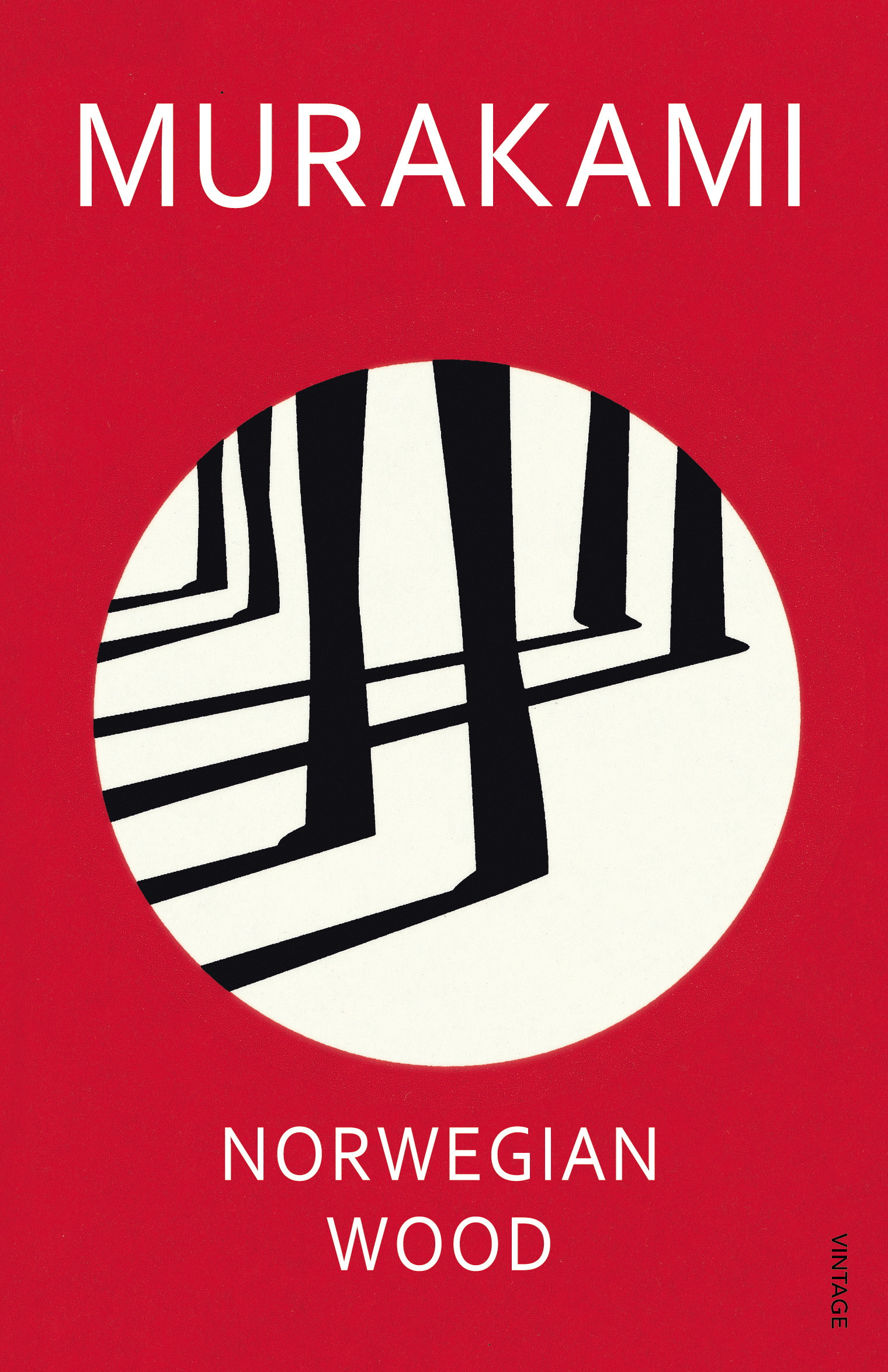
The novel is set in Tokyo during the 1960s. The ‘60s witnessed revolutions all over the world, and Japan was no different. Yet, while Murakami’s novel is set against this backdrop, it possesses a certain “spaceless” and “timeless” quality. I don’t mean that in a positive way. Quite the contrary: you could transform the story effortlessly to any postmodern milieu, anywhere on the globe—the United States especially. I find this problematic.
The Butter-Stink of Nowhere
In Japan, there is a term called batakusai (“butter-stink”), referring to things that feel uncomfortably Western. Norwegian Wood reeks of it.
With Murakami, one never runs the danger of learning anything about Japan. In his drama class, Watanabe studies Racine, Ionesco, and Shakespeare. “Stuff like that.” He reads Truman Capote and Scott Fitzgerald. He has nothing to discuss with peers who read Japanese giants like Kenzaburo Oe or Yukio Mishima because he keeps returning to his Western favourites.
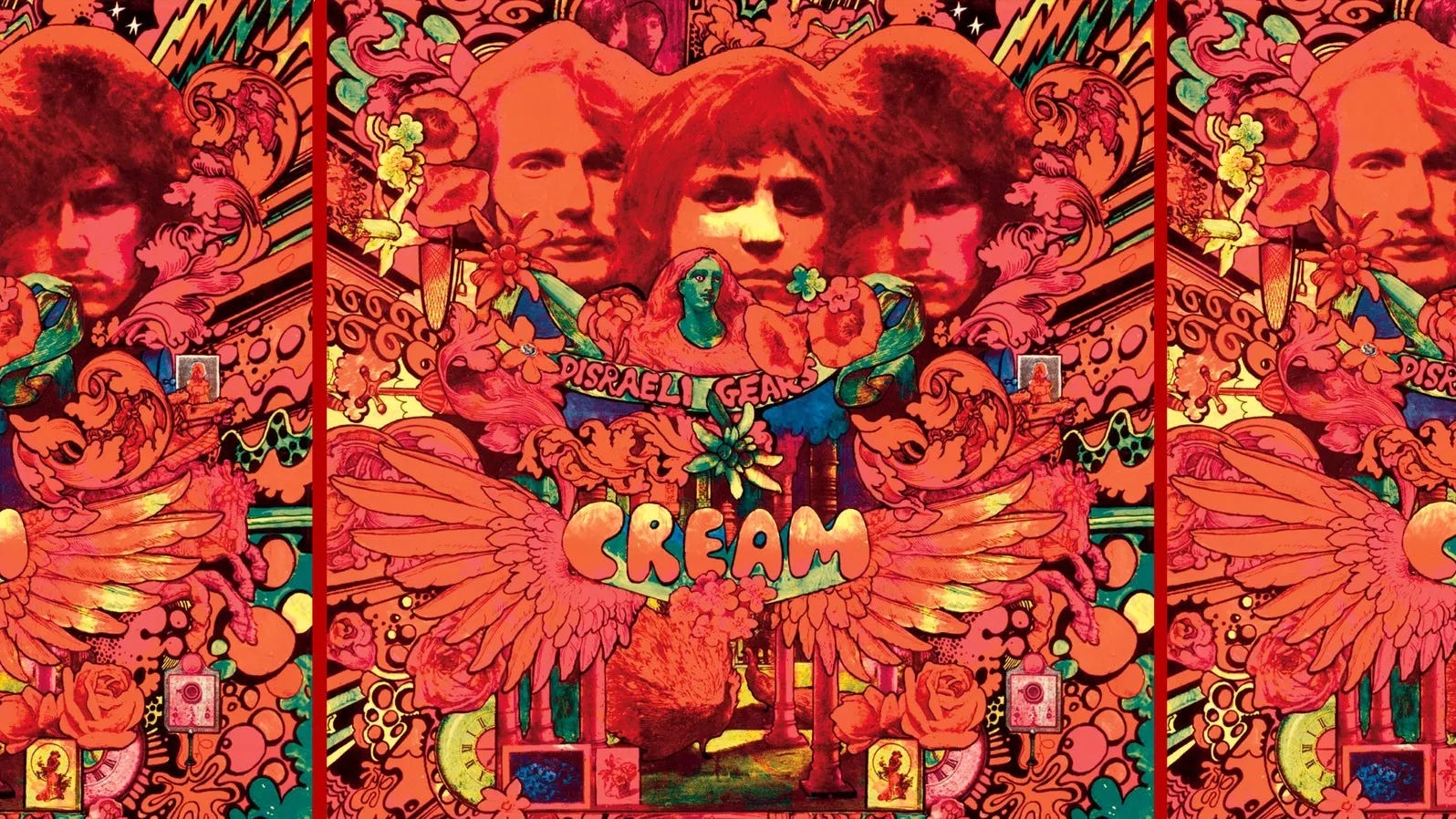
As the novel progressed, my marginalia became increasingly snarky. At one point, a minor character appears with a dog named Pepe—even the incidental animals require Spanish names! Later, there is a discussion about the movie The Graduate and a barrage of references to Cream’s White Room and Simon & Garfunkel. When John Coltrane dies in 1967, Murakami notes the gloom that descended. It is as if the author is curating a playlist rather than a world. One wants to ask: Did nobody important die in Japan that year?
The Vacuum of History
This cultural rootlessness bleeds into a more troubling political vacuum. The novel is set in late-1960s Tokyo, a time of violent student riots and radical social upheaval. Yet, Watanabe and his friends remain safely hermetically sealed from the action.
The dissonance is jarring. Watanabe is a liberal arts major studying drama—a field that, in the 1960s, was the very crucible of sensitive idealism and radical thought. Yet, he harbours a profound, unexplained disillusionment with revolution. It is one thing to be cynically jaded, but Murakami provides no context for why.
And it isn’t just him. No one else in the novel seems capable of thinking beyond their own gloom, ennui, or sorrows. For that specific milieu, this collective apathy is a sociological oddity.
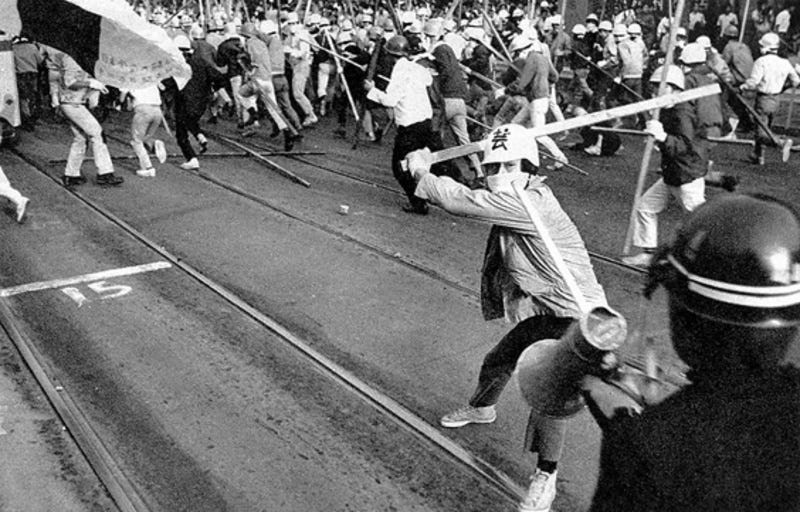
Murakami’s characters treat revolution as background noise. In one particularly telling scene, Toru and Midori sit on a roof drinking beer, playing guitar, and singing pop songs while a nearby building burns down. It is hard to say if Murakami is being clever here or if it is symptomatic, but the image is perfect: the world burns, and the Murakami hero strums a guitar.
“In terms of everyday life,” Watanabe says, “it made no practical difference to me whether the place was right-wing or left-wing or anything else.”
Lucidity Over Complexity
This, I suspect, is the secret to his global popularity. Murakami offers a safe harbour for readers who wish to experience the aesthetic of sadness without the burden of its context. It is a “commodity loneliness”—consumable, stylish, and ultimately hollow.
His writing has a certain fluidity—he is eminently readable, with a judicious dosage of sexual encounters and pop culture references. He avoids uncomfortable topics like politics, religion, or history. The conversations in the book, often mistaken for deep philosophical ramblings on death and memory, rarely hold up to scrutiny. They are the banter of adolescents who have mistaken self-pity for profundity.
Unlike the characters of his contemporaries, who are forced to confront the friction of reality, Murakami’s characters float in a beautifully curated limbo. Norwegian Wood is a story of “nowhere”—a stylish, comfortable void that offers the aesthetic of sadness without its weight.