

One of the underpinnings of modern governance is the state's monopoly on violence as conceptualized by the German sociologist Max Weber. While private individuals or organizations can (and do) resort to violence, such acts are construed as illegal crimes. Only the state has a legitimate claim on the use of force, including physical force and violence against its citizens. In principle, the concept of the state's monopoly on violence stems from a critical trade-off in modern societies: the surrender of a degree of individual autonomy in exchange for the order and security that a centralized, legitimate authority on the use of force can provide.
While the theoretical frameworks and terminology regarding this might be modern, the concept and its implementation are perhaps as ancient as societies. (Here, I am referring less to a strict Weberian 'monopoly' and more to the coercive authority wielded by feudal lords and undemocratic empires. This power was often decentralized unlike the singular monopoly claimed by a modern state.) This legitimacy, in theory, is supposed to be earned by the state or granted to it by society. However, often it is simply assumed or taken by force by the state. We see it all around us: from something as grand as the declaration of a state of emergency to the quotidian bulldozing of houses, seizing farmers' lands or forests for industrial-scale projects in the name of development.
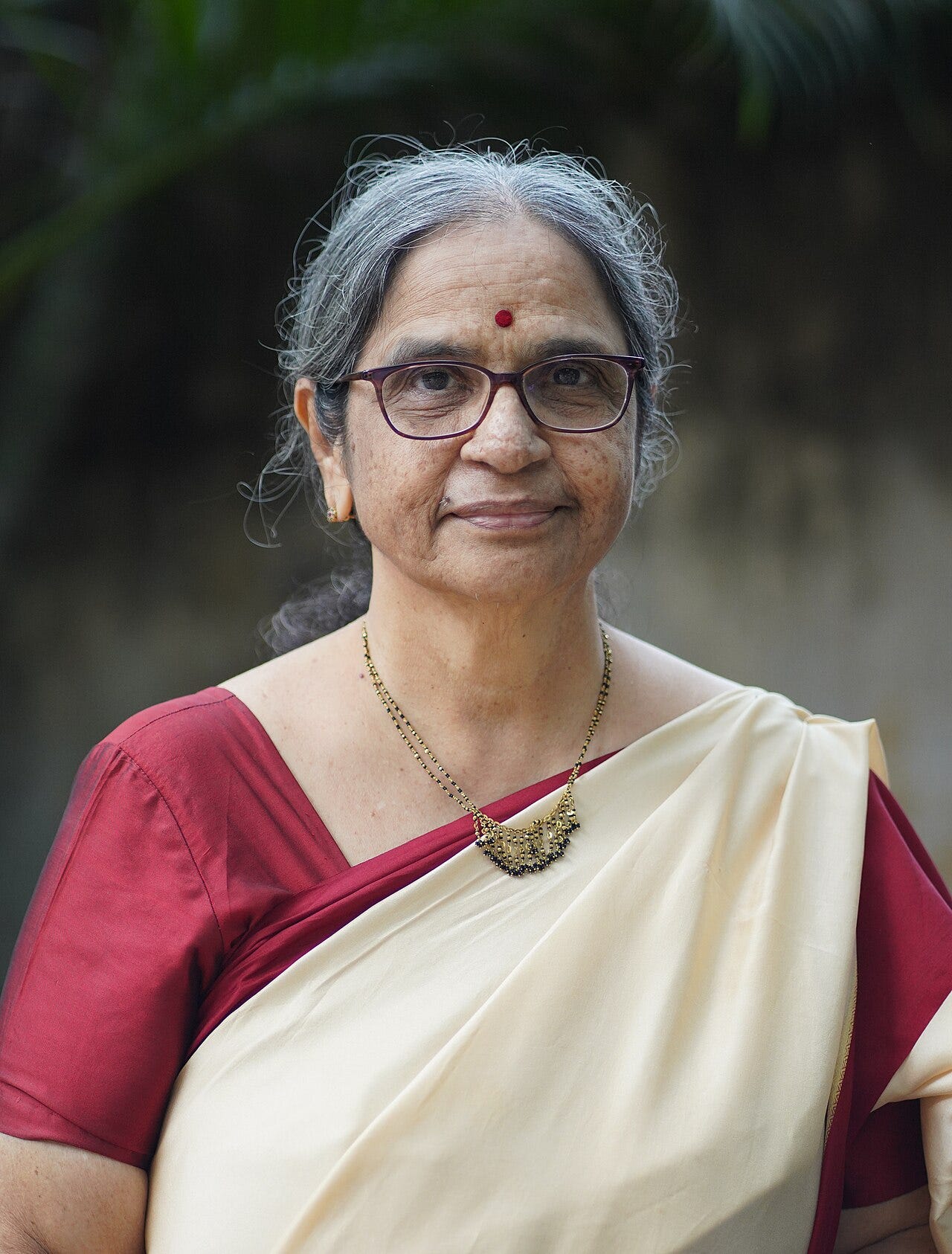
In the novel 'On the Banks of the Pampa', celebrated Telugu writer Volga (P. Lalita Kumari) makes us confront this timeless violence of the state through the reimagining of Sabari’s story and her encounter with Rama. She discusses the problems of modern notions of development and the displacement of Adivasis and forest dwellers by retelling an ancient tale from a leftist feminist perspective. Through the course of the narrative, she also challenges our anthropocentric worldview and presents a broader, more inclusive ecocentric worldview.
That Volga chooses to tell her story in an unadorned, straightforward manner reminiscent of the pre-modernist period is interesting and courageous. Perhaps it hints at a writer who feels secure, one who is confident in her craft. How well her conviction and vision have blended with the form and content of her novel is a question worth pondering. I found the narrative a tad simplistic, one-dimensional, and not very convincing. However, this is not the space for a detailed review of the novel.
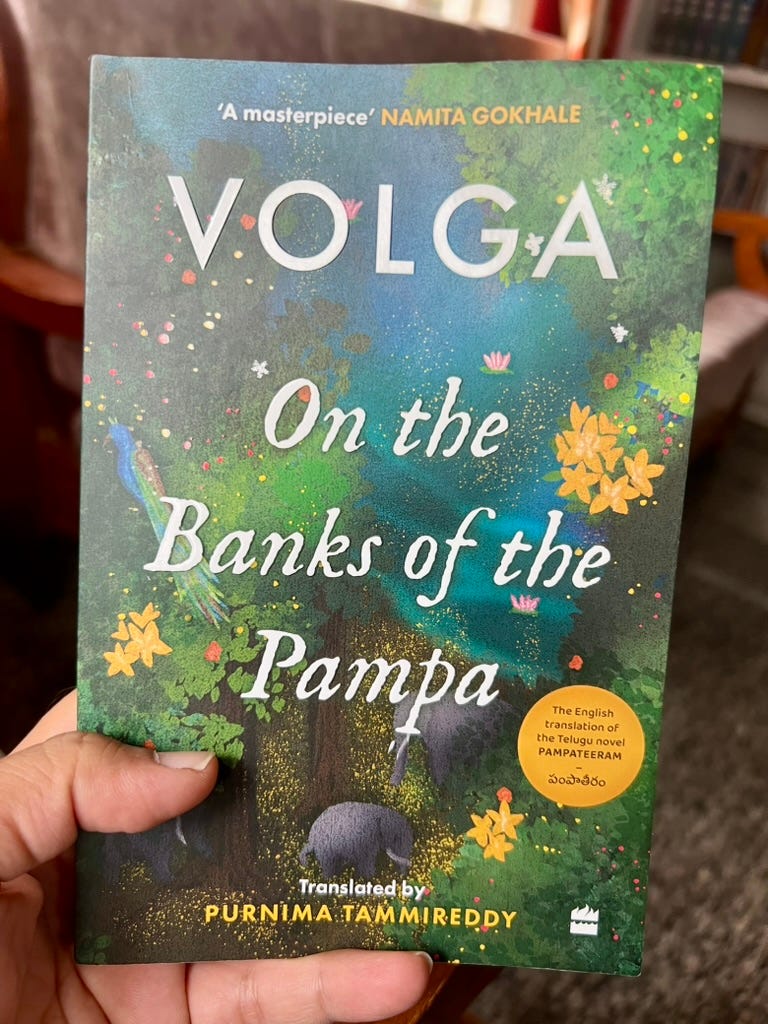
Whatever the strengths or shortcomings of the novel, the translator Purnima Tammireddy has done a commendable job. She has ably translated the novel from Telugu to English. It flows quite naturally in English while retaining the essence of the original.
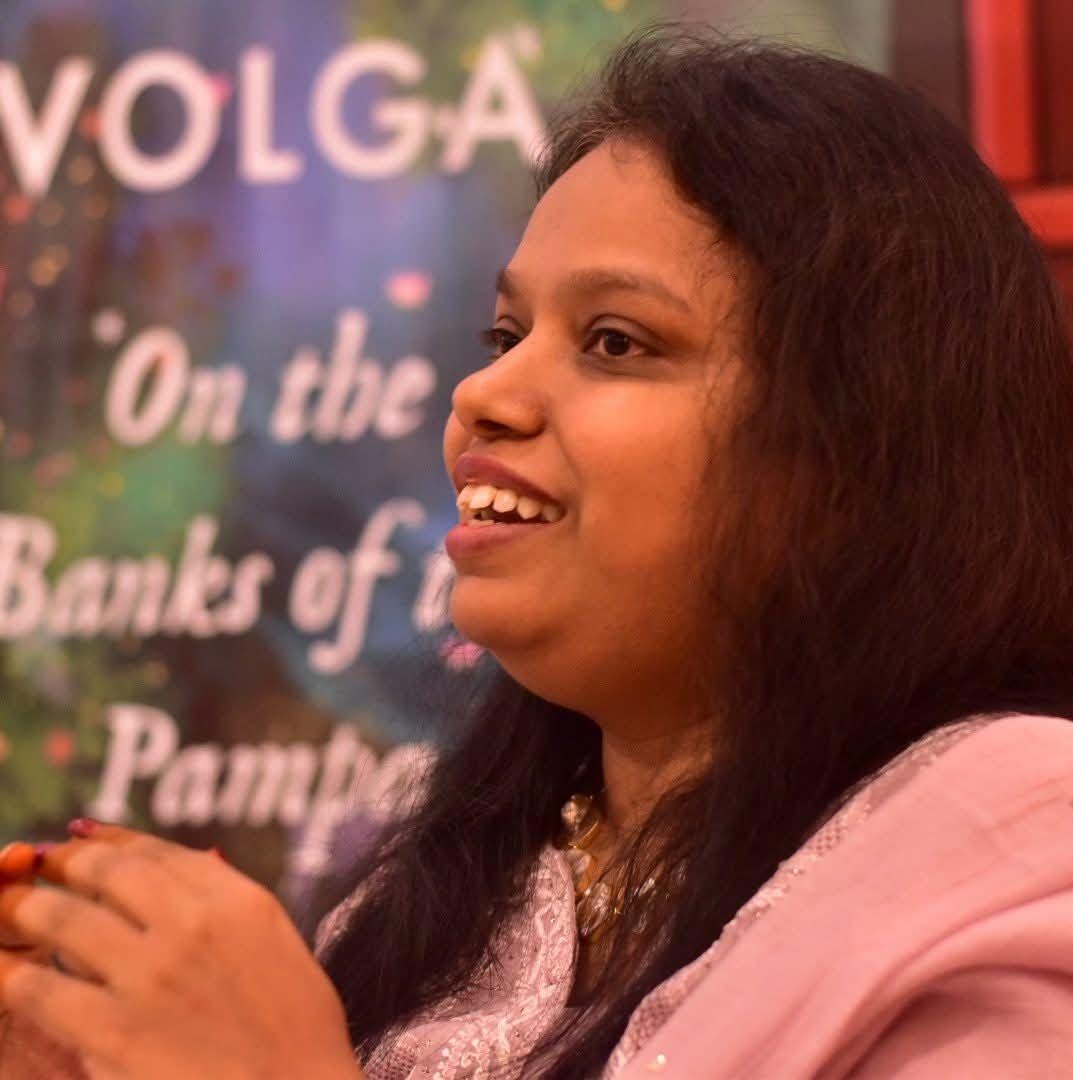
At the end of the book, a conversation between Volga and Purnima is included, and it is worth reading. It helps the uninitiated -- such as yours truly -- to get a glimpse into Volga's politics and writing. It is also instructive, offering insight into both Volga and Purnima's approach to creative writing, translation, and their interplay. Volga's creative vision shines through more clearly in this conversation — even more than in the novel itself.